






At Fitness Tech, you will find a selection of treadmills designed for different forms of training, spaces, and levels of use. Our range includes foldable models for home use, treadmills with features designed for more demanding use, and professional equipment prepared for sports facilities, as well as a motorless Air Runner curved treadmill for those seeking a different running experience.
Choosing a suitable treadmill does not depend solely on maximum speed or motor power. The running surface, incline, cushioning system, maximum user weight, dimensions, format, and usage classification are also important aspects to consider. At Fitness Tech, you can compare different configurations to find a machine suited to your needs, whether you want to train at home or equip a sports facility.
Professional-Quality Treadmills
A treadmill should offer an appropriate combination of stability, durability, movement control, and performance according to its intended use. Not all users need the same features: someone who wants to walk or run at home may be looking for a foldable machine that is easy to integrate into their space, while a sports center needs equipment prepared for more demanding and continuous use.
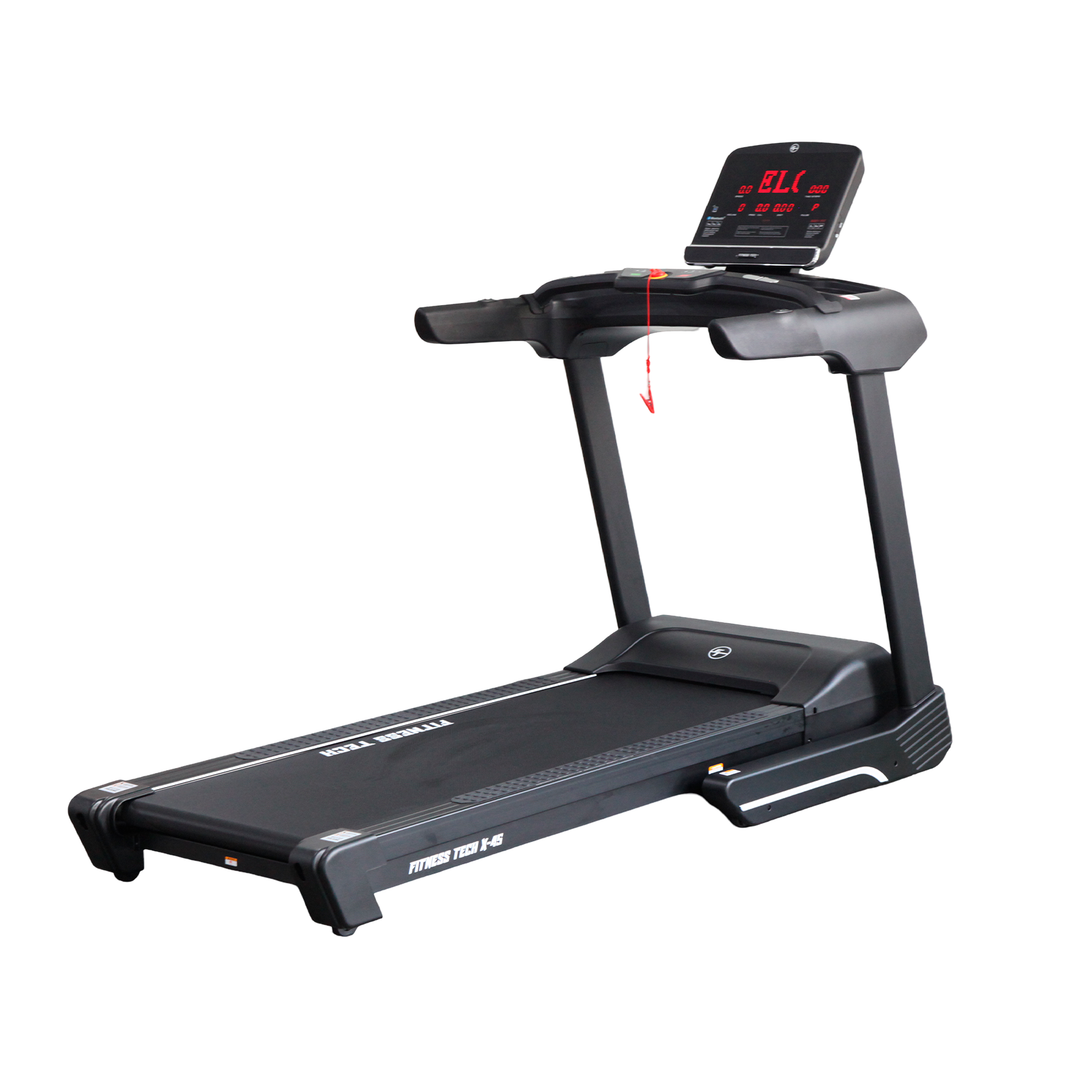
Within the Fitness Tech range, you will find different configurations. The X-30 is designed for home use and has an HC classification, while the X-45 also has an HC classification and offers higher performance. For a professional environment, the X-70 Pro Series has an SC classification and is prepared for commercial use, while the Air Runner also has an SC classification and offers a motorless curved running system.
Types of treadmills: choose the one that best suits you
There are different types of treadmills, and each configuration meets specific needs. Electric treadmills use a motor to move the running surface and allow the speed to be adjusted, while motorless curved treadmills use the momentum generated by the user to move the surface.
We also offer foldable treadmills, which are particularly useful when space is limited. Before choosing a model, it is worth considering the type of training you want to do, the speed you need, the dimensions of the running surface, the maximum user weight, and whether you need to store the machine after each session.
Electric treadmills: performance and total control
Electric treadmills feature a motor that moves the belt and allows users to control their speed during training. This configuration makes it easy to switch from walking to running and adjust the intensity of each session, while certain models also feature electric incline systems and various connectivity functions.
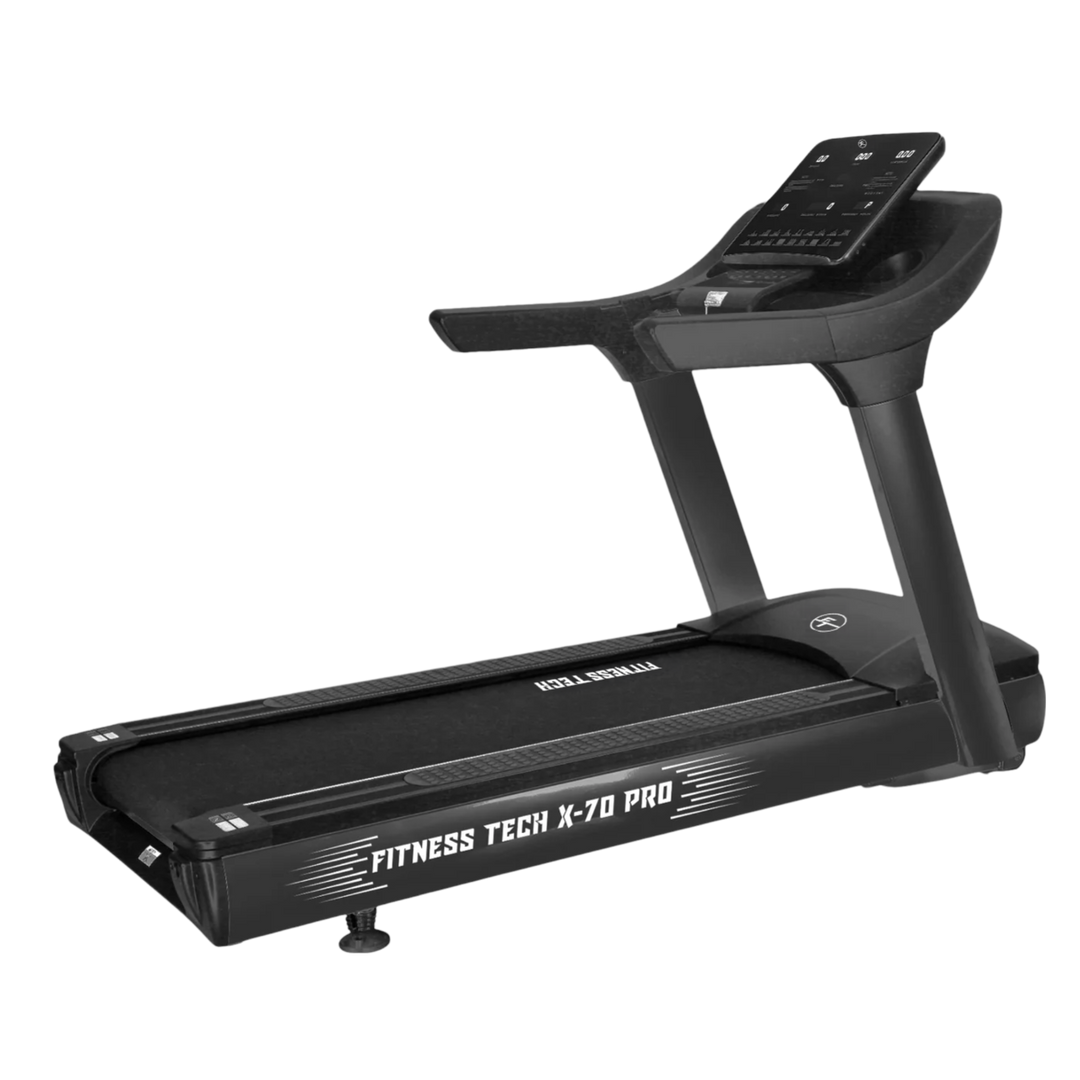
The Fitness Tech range includes different power levels. The X-30 features a 3 HP motor and reaches up to 18 km/h, while the X-45 has a 4.5 HP motor and reaches up to 20 km/h. At a higher level, the X-70 Pro Series features a 7 HP peak and 4.5 HP continuous AC motor, with a maximum speed of up to 25 km/h. These differences make it possible to select a machine based on the planned training intensity and type.
Foldable treadmills: ideal for small spaces
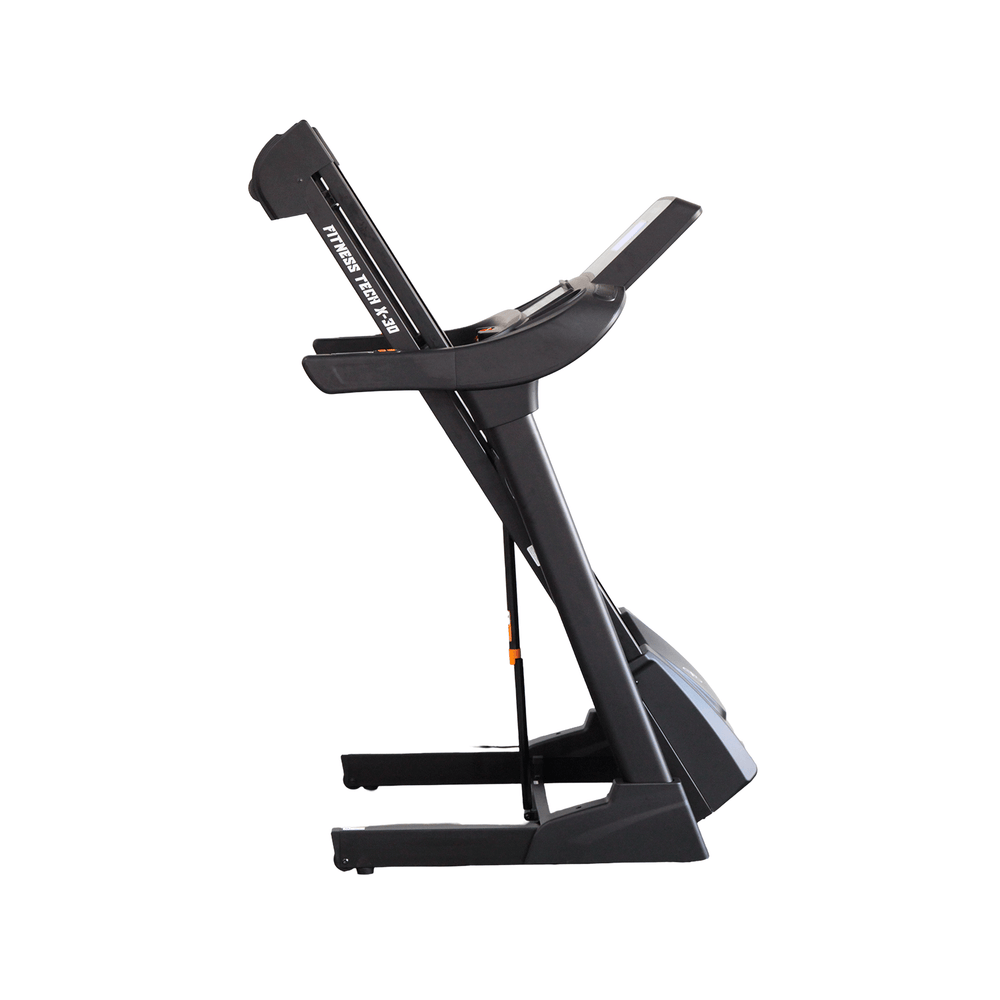
Foldable treadmills make better use of the available space at home. Their folding system makes it easy to store the machine when it is not in use, which is particularly useful in multipurpose rooms or spaces where the training area also serves other purposes.
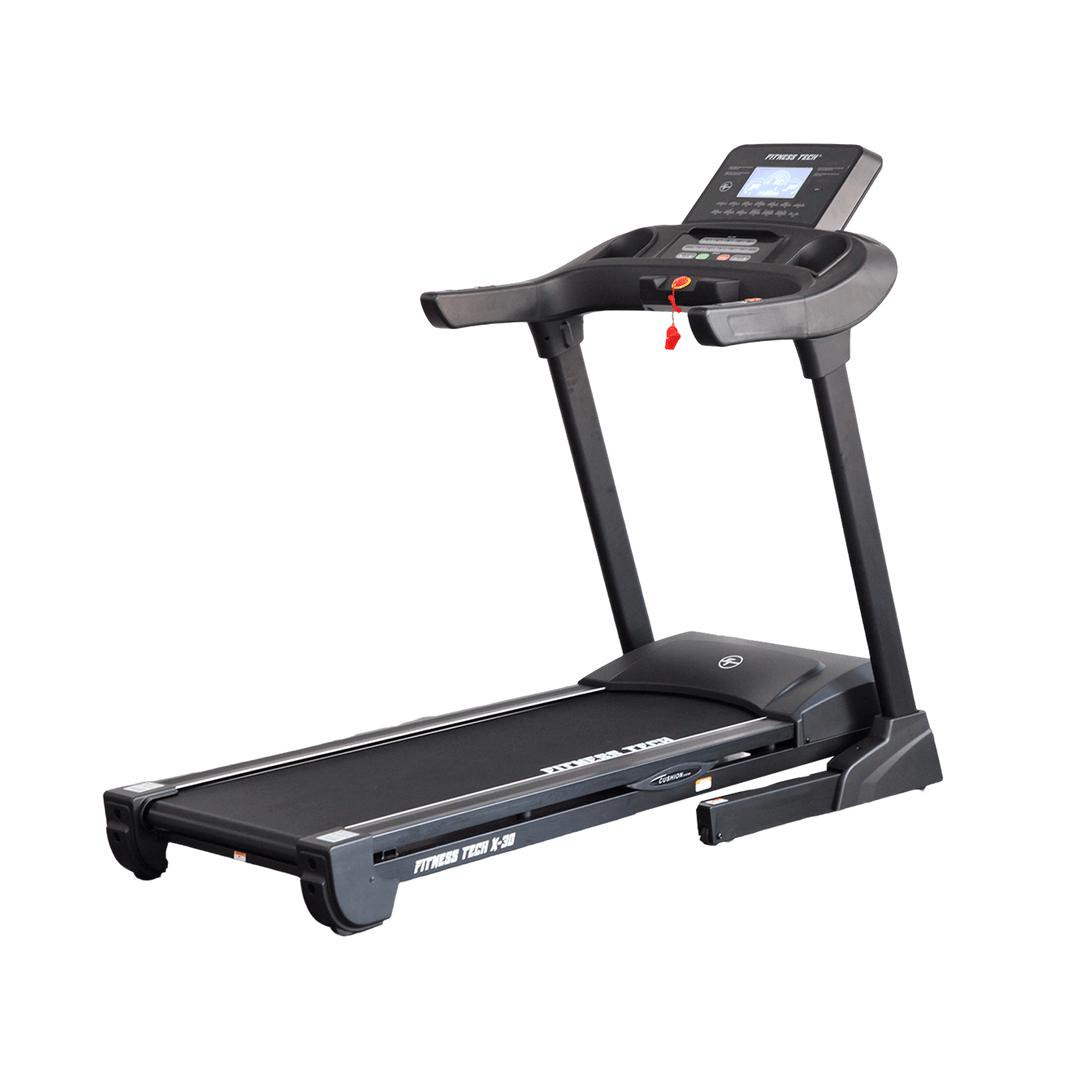
The X-30 and X-45 feature a foldable design and wheels that make them easy to move. The X-30 measures 197 × 84.6 × 36.5 cm and weighs 73.5 kg, while the X-45 measures 199 × 92 × 149 cm and weighs 113 kg. Before installing a foldable treadmill, it is important to check both its dimensions and the available space to use and store it correctly.
Walking treadmill and walking pad: smooth, progressive movement
Walking treadmills are primarily intended for those looking to incorporate walking into their physical activity routine. This type of training allows users to complete moderate-intensity sessions and progressively control their pace, adapting it to each user's needs.
A treadmill for walking or running should be chosen based on its intended use. If you also want to run, it will be especially important to consider the maximum speed, running surface and maximum user capacity. This way, you can choose a model that provides enough room to progress in your training.
Curved treadmill (Air Runner): motorless, maximum performance
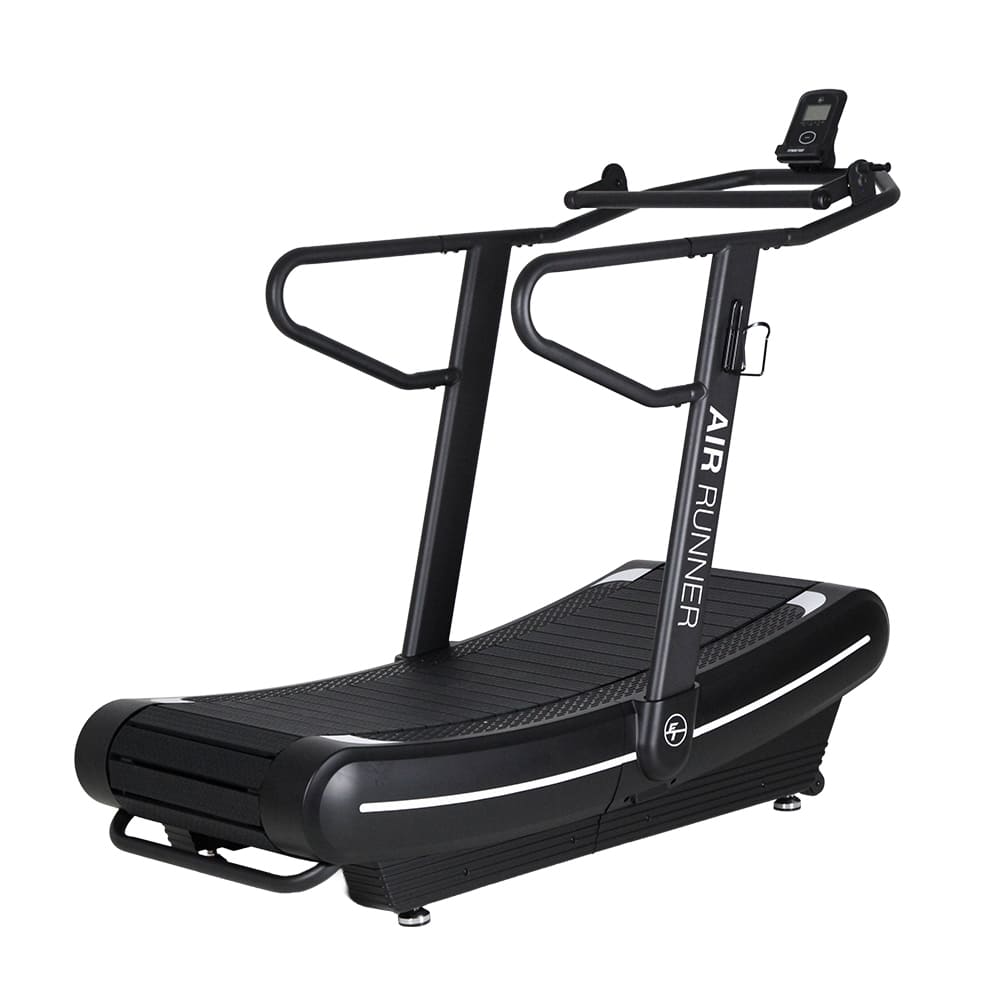
The Air Runner is a curved treadmill that operates without a motor. Instead of using an electric system to move the surface, movement is generated by the user’s own stride. The curved design provides a different running experience compared with conventional electric treadmills.
The Fitness Tech Air Runner has an SC classification for professional use, a 176 × 48 cm running surface and a maximum user capacity of 170 kg. Its motorless operation and structure are designed for demanding workouts, running and professional sports facilities seeking an alternative to traditional electric treadmills.
Key technical features to consider before buying
Before buying a treadmill, it is important to analyze its main technical features. Motor power, maximum speed, running surface, incline and cushioning system directly affect the training possibilities and the feel of every session.
You should also consider the maximum user weight, overall dimensions, the machine’s own weight and, where applicable, whether the model is foldable. Comparing these specifications helps you choose a treadmill that truly suits the available space and the type of exercise you want to perform.
Motor power: continuous HP vs peak HP
Motor power is one of the main factors when comparing electric treadmills. However, it is important to distinguish between continuous power and peak power when both are specified. Peak power represents a maximum value, while continuous power refers to the power the motor can maintain during operation.
The X-70 Pro Series is a clear example of this difference, as it features a 7 HP peak and 4.5 HP continuous AC motor. The X-30 has a 3 HP motor and the X-45 has a 4.5 HP motor. These figures should be analyzed together with the maximum speed, running surface, user weight, and intended use to select the right model.
Maximum speed and running surface
The maximum speed determines the maximum intensity a motorized treadmill can reach. A machine intended primarily for walking does not require the same specifications as a treadmill used for running, intervals, or higher-intensity training.
The running surface is also essential. A wider surface provides more space for taking a stride and may be especially beneficial for running. The X-30 features a running surface of 46 × 138 cm, the X-45 features 53 × 151 cm and the X-70 Pro Series features 58 × 166 cm. The Air Runner features a running surface of 176 × 48 cm.
Electric incline: percentage, levels, and benefits
Electric incline allows you to adjust the slope of the running surface during training. This function makes it possible to vary the intensity of the session without relying solely on increasing speed and offers different ways to structure workouts.
The X-30 features 15 levels of automatic incline and a stated maximum gradient of 5.7°. The X-45 also has 15 levels and a stated maximum gradient of 8.25%, while the X-70 Pro Series features 15-level motorized incline and a range of 0–8.25%. These differences make it possible to compare the models according to the needs of each workout.
Cushioning: joint protection with every stride
The cushioning system affects the feel underfoot and helps reduce some of the impact generated during running. It is particularly relevant when training sessions are frequent or a high number of strides accumulates.
The X-30 features dual gel cushioning, while the X-45 uses a cushioning system with rubber and silicone gel. The X-70 Pro Series features a full suspension system. In this way, the different models offer distinct solutions to support movement during training.
How to choose your treadmill: a guide by user profile
Choosing a treadmill should begin by defining how and where you will use it. A person looking to walk or run occasionally at home does not need the same features as a user who trains frequently or a sports facility that needs a machine prepared for professional use.
In addition to power and speed, it is worth considering the available space, the machine’s format, the running surface, the maximum user weight, the incline, and the functions you will actually use. Analyzing all these factors makes it possible to find well-balanced equipment suited to your needs.
By frequency of use: home, semi-professional, and professional
The frequency and environment of use are important criteria when selecting a treadmill. For home use, the X-30 offers a home-oriented configuration and has an HC classification. The X-45 also has an HC classification and offers higher performance within the range.
For a professional environment or particularly demanding training, it is necessary to consider models with construction and a classification suitable for this type of use. The X-70 Pro Series has an SC classification for commercial use, while the Air Runner also has an SC classification for professional use.
By space: folding vs. fixed, dimensions, and noise
The available space directly determines which model you can install. Folding treadmills such as the X-30 and X-45 allow you to store the machine when it is not in use, while the X-70 Pro Series and the Air Runner are designed as non-folding equipment.
Before buying a treadmill, you should check its dimensions and make sure you have enough space to use it correctly. It is also worth considering the equipment’s weight: the X-30 weighs 73.5 kg, the X-45 113 kg, the X-70 Pro Series 246 kg, and the Air Runner 130 kg. For folding models, it is also important to check the available space for storing and moving the machine.
By budget: entry-level, mid-range, and high-end
Budget is another factor that can help you narrow down the available options, but it should not be the only criterion. Differences between models may relate to aspects such as power, maximum speed, running surface, incline, cushioning, connectivity, construction, and usage classification.
Fitness Tech offers different levels of equipment. The X-30 provides a configuration designed for home use, the X-45 delivers higher performance within this segment, while the X-70 Pro Series and the Air Runner are classified for professional use. Comparing the technical specifications makes it possible to determine which level of equipment you really need.
Benefits of training with a running machine
A running machine enables controlled cardiovascular training and allows you to adjust the intensity to different levels. By regulating the speed and, on certain models, the incline, you can alternate between walking, continuous running, and higher-intensity workouts.
- Cardiovascular training: allows you to perform cardio sessions adapted to each user's fitness level.
- Intensity control: electric treadmills allow you to regulate your speed during training.
- Incline training: compatible models allow you to adjust the incline to vary the intensity.
- Home training: makes it easier to maintain a cardio routine without depending on outdoor conditions.
- Progressive training: allows you to adjust the session pace according to the user's fitness level and goals.
- Versatility: models are available for walking, running, high-intensity training, and professional use.
The ability to walk, run, or perform variable-intensity sessions makes treadmills a versatile solution for integrating cardiovascular work into different training routines.
Home treadmill
A home treadmill makes it possible to incorporate cardiovascular training into your daily routine without having to travel. It is a practical solution for those who want to train independently of outdoor conditions and adapt their exercise schedule to their needs.
The X-30 is classified as HC for home use and combines a foldable design with a 3 HP motor, speeds of up to 18 km/h, 15 incline levels, a 46 × 138 cm running surface, and dual gel cushioning.
For those seeking higher performance in a home environment, the X-45 features a 4.5 HP motor, a maximum speed of 20 km/h, a 53 × 151 cm running surface, 15 incline levels, and a maximum user weight of 160 kg. It also retains a foldable design.
Treadmill maintenance
Proper maintenance helps preserve the machine’s operating condition and contributes to extending the service life of its components. Specific tasks may vary depending on the model, so it is important to always follow the instructions applicable to each treadmill.
- Lubrication: perform the maintenance specified for the running surface and use the products recommended for each model.
- Cleaning: regularly remove dust and dirt accumulated on the machine.
- Belt inspection: periodically check its condition, alignment, and tension whenever required by the model.
- Component inspection: check that screws, handrails, and components remain properly tightened.
- Proper use: follow the specifications and limits indicated in the product’s technical information.
Some models include specific solutions to simplify maintenance. The X-70 Pro Series, for example, features an automatic lubrication system, a particularly useful feature for a machine intended for professional use.
Buying a treadmill at Fitness Tech
At Fitness Tech, you can find treadmills for different training profiles, from foldable models designed for home use to professional machines prepared for sports facilities and more demanding training. The range of configurations allows you to compare power, speed, running surface, incline, cushioning, and user capacity.
If you are looking for a treadmill for home use, the X-30 features a foldable design and specifications geared toward domestic use. The X-45 increases power, running surface, and user capacity while retaining the foldable design. For a professional environment, the X-70 Pro Series offers an AC motor, speeds of up to 25 km/h, a 58 × 166 cm running surface, and SC classification. And if you are looking for a motorless running experience, the Air Runner provides a curved design powered by the user’s movement and professional SC classification.
Before buying, compare the technical specifications of each model and select the treadmill that best suits your space, training frequency, type of exercise, and level of demand. This way, you can find a treadmill that truly meets your needs, whether you are training at home or equipping a sports facility.