



Weight bars are one of the fundamental elements of strength training and free-weight equipment. At Fitness Tech, you will find a wide selection of Olympic bars, hex bars, Safety Squat Bars, Super Curl bars, training bars, and fixed assembled bars, with different lengths, weights, diameters, and rotation systems.
Each type of bar is designed for specific needs. From a 2.20 m, 50 mm Olympic bar for strength exercises to shorter bars for specific arm work, training bars for beginners, or fixed assembled bars for weight rooms. This variety makes it possible to find a suitable option for different forms of free-weight training.
Guide to choosing your weight bar
Choosing a weight bar depends not only on its length or weight. Before buying, you should primarily consider the maximum load, diameter, rotation system, length, and type of training you plan to perform.
If you are looking for a bar for squats, bench presses, or deadlifts, an Olympic bar can be a versatile option. For specific arm exercises, there are bars such as the Super Curl bar or the EZ bar, while hex bars and Safety Squat Bars offer alternatives for different strength movements.
It is also important to check the bar's compatibility with the plates you already have, especially if you plan to use 50 mm Olympic plates. The bar's length and the available space in the rack should also be taken into account before choosing a model.
Shaft diameter: 25 mm vs. 50 mm (Olympic)
One of the features you should check is the diameter of the bar's loading system. In the Fitness Tech catalog, you will find 25 mm bars and Olympic bars with 50 mm sleeves, designed for different types of plates and uses.
25 mm bars are available in models such as the Super Curl bar and the 1.8 m straight bar. On the other hand, 50 mm Olympic bars use the Olympic loading system and allow you to train with plates compatible with this diameter.
Within the Olympic range, there are different lengths, weights, and rotation systems. Therefore, in addition to the diameter, it is important to review the specific features of each bar to ensure that it suits the training you want to perform.
Maximum load and bar weight
The bar's own weight and maximum load are two essential factors for making the right choice. Not all bars are designed to withstand the same loads, so it is always advisable to consult the specifications for each model.
At Fitness Tech, you will find bars with different load capacities. Some models can handle 315, 318, 320, 340, 365, and 454 kg, depending on the type of bar and its characteristics. We also offer a 2.35 m Safety Squat Bar with a stated maximum capacity of 680 kg.
Bar weight also varies by model. Olympic bars are available in different configurations, including 15 and 20 kg models, while technical bars are considerably lighter to facilitate learning the movements.
Before choosing a bar, check both the bar's weight and the stated maximum load, and select a model suited to the type of training you are going to perform.
Bearings vs. bushings: which system to choose
The sleeve rotation system has a particularly significant effect on the feel of an Olympic bar in motion. The bars available from Fitness Tech feature different configurations, from models without bearings to bars equipped with multiple bearings and bushings.
The catalog includes models with 2, 4, and 8 bearings, as well as bars that combine bearings with bronze bushings or copper bushings. There are also models that do not incorporate bearings.
The choice will depend on the type of training and the characteristics you are looking for in the bar's movement. Therefore, it is always advisable to consult each model's technical specifications to learn about its specific rotation system.
15 kg or 20 kg bar: which one is right for whom
The bar's weight directly affects the initial load of the exercise and training progression. 15 kg bars allow users to start with a lower initial load and may be particularly suitable for those beginning free-weight training.
20 kg bars are a common option among larger Olympic bars. Fitness Tech offers various 20 kg models, including 2.20 m versions and different bearing and maximum load configurations.
The choice depends not only on the user's gender, but also on factors such as training level, the initial load required, grip diameter, and the type of exercise they are going to perform.
Bar types: which one to use for each exercise
Not all weight bars serve the same purpose. Fitness Tech offers different formats to suit both basic strength-training exercises and various forms of strength training and specialized work.
Straight Olympic Bar
The straight Olympic bar is one of the most versatile options for strength training. It is used for exercises such as squats, bench press, deadlifts, rows, and military press, as well as other barbell movements.
The catalog includes different lengths and configurations, from shorter bars to professional models measuring 2.20 m and 50 mm, with different bearing systems and load capacities.
There are also 2 m, 15 kg Olympic bars, as well as shorter options intended for specific exercises. This variety allows you to adapt your bar choice to the available space and type of training.
Hex bar (trap bar): closed and open
The hex bar or trap bar allows the user to stand inside the bar's structure during the lift. This configuration changes the position of the load compared with a straight bar and is particularly useful for exercises such as the deadlift.
Fitness Tech offers 50 mm hex bars in different configurations, including closed models and an open hex bar version. These bars expand the possibilities of free-weight training and allow the movement to be adapted to different needs.
The choice between a closed or open hex bar will depend mainly on the type of exercises you want to perform and the space available for movement.
Super Curl Bar and EZ Bar
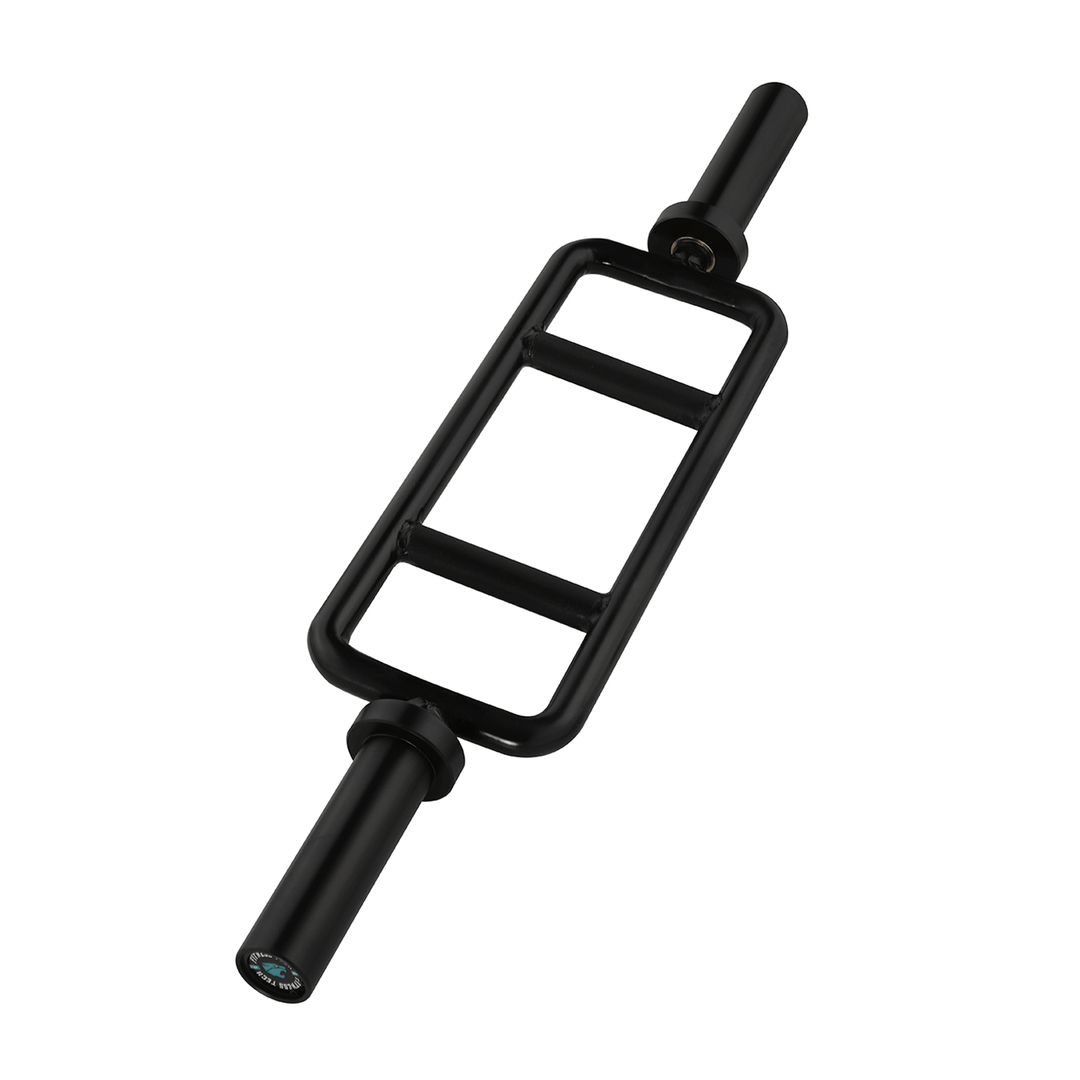
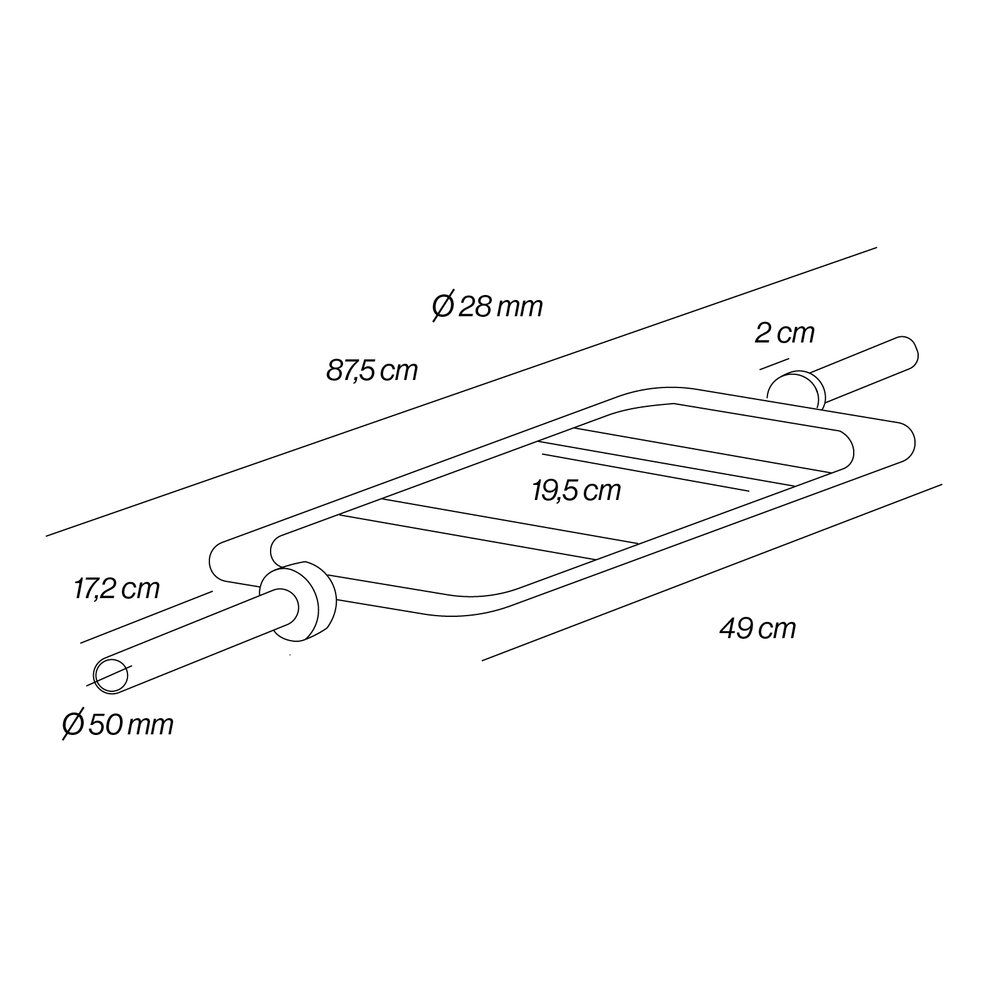
The Super Curl bars and EZ bars are designed primarily for arm training. Their geometry allows you to change the position of your hands compared with a straight bar and provides a different grip during exercises such as biceps curls and triceps extensions.
Fitness Tech offers a 1.5 m, 25 mm Super Curl bar, as well as a 1.2 m, 50 mm Olympic Super Curl bar with a stated maximum load of 181 kg.
These bars are an alternative for those looking to perform more targeted biceps and triceps training and wanting to vary their grip compared with a conventional straight bar.
Safety Squat Bar (SSB)
The Safety Squat Bar (SSB) is a specialized bar for performing squats. It features a padded structure and front handles, allowing you to hold the bar without placing your hands behind your shoulders as you would with a conventional straight bar.
This design offers an alternative for users seeking to modify the grip and load position during squats. It is also a tool used in strength training and powerlifting.
The catalog includes Safety Squat Bars in different dimensions and capacities. These include one measuring 2.20 m and weighing 20 kg, with a maximum load of 318 kg, and another measuring 2.35 m and weighing 32 kg, with a maximum load of 680 kg.
Light technique bars
Technique bars are designed to practice movement execution with a reduced starting load. They are especially useful for beginners, technical learning, and warm-ups.
At Fitness Tech, we offer technique bars measuring 183 cm and weighing 6.8 kg, with a stated maximum load of 45 kg. The Gold and Black models feature a 50 mm load area, a 28 mm grip diameter, 2 bearings, and 2 copper bushings.
These features allow you to practice movement technique before moving on to bars with greater weight and load capacity.
Fixed bars
Fixed bars have the weight integrated directly into the ends, so there is no need to add or remove plates during training.
Fitness Tech offers straight and curved fixed bars in different weights: 10, 15, 20, 25, 30, 35, 40, and 45 kg. The different variants allow you to select the load you need directly for each exercise.
The straight fixed bar can be used for exercises such as bench press, rows, biceps curls, front squats, and Romanian deadlifts, while the curved version is primarily intended for arm training and specific movements.
Fitness Tech bar comparison table
| Bar | Length | Weight | Maximum load | Diameter | Rotation system |
|---|---|---|---|---|---|
| 2.2 m Professional Olympic | 220 cm | 20 kg | 454 kg | 50 mm / 28 mm grip | 8 needle bearings |
| 2 m Olympic | 200 cm | 15 kg | 340 kg | 50 mm | 4 bearings per end |
| Gold / Black Technique | 183 cm | 6.8 kg | 45 kg | 50 mm / 28 mm grip | 2 bearings + 2 copper bushings |
| Olympic Super Curl | 120 cm | 10 kg | 181 kg | 50 mm load / 28 mm grip | 2 bearings + 2 bronze bushings |
| 1.5 m Olympic | 150 cm | 12 kg | 315 kg | 50 mm / 25 mm grip | 2 bearings + 2 bronze bushings |
Compatibility: plates, racks, and available space
Before buying a weight bar, it is important to check that it is compatible with both your plates and the rack or cage where you will use it.
On 50 mm Olympic bars, the sleeves are designed to work with plates compatible with this diameter. This allows you to configure different loads and combine the bar with various types of Olympic plates and bumper plates.
You must also check the bar's total length. A 220 cm bar requires a rack with enough internal width for the sleeves to extend beyond the uprights, making it easier to load and unload the plates.
In addition, there must be enough lateral space to load and unload the bar comfortably and perform exercises without the plates coming into contact with walls, machines, or other elements in the space.
Compatible Olympic plates and bumper plates
50 mm Olympic plates and bumper plates are compatible with bars fitted with sleeves of this diameter.
This setup is common in spaces intended for free-weight training. Compatibility between the plates and the bar must always be checked based on the diameter of the loading sleeve.
Required space and rack width
The bar's length is another factor to consider when designing your training area. 220 cm Olympic bars require a rack or cage with enough space to position the bar correctly and allow plates to be loaded and unloaded.
If you have a compact rack or limited space at home, it may be more practical to choose a shorter bar, provided its features are suitable for the training you want to do.
Collars and locks: the essential accessory
Barbell collars and locks keep the plates in position during exercise and are an essential accessory when training with free weights.
There are different locking systems for securing plates during training. The choice will depend on the type of bar and each user's needs.
For bars with a 50 mm Olympic sleeve, make sure to use collars compatible with this diameter.
Conclusion
Choosing a weight bar correctly allows you to adapt your training to the type of exercise, the user's level, the available space, and the load you want to handle. There is no single bar that is suitable for every situation: a straight Olympic bar offers great versatility, while a hex bar, Safety Squat Bar, Super Curl, or EZ bar allows you to work with different positions and goals.
At Fitness Tech, you will find bars for bodybuilding, strength training, functional training, and technical work, as well as lightweight technical bars and fixed bars mounted for training rooms. Before choosing your bar, always check its length, weight, diameter, maximum load, and rotation system to find the model that best suits your needs.