

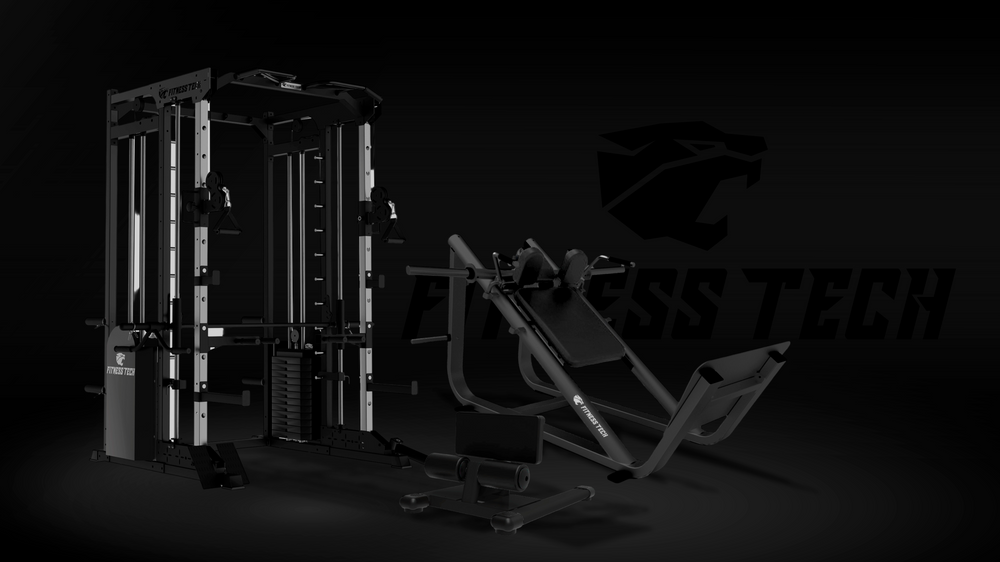


PRO SERIES

COMPACT SERIES


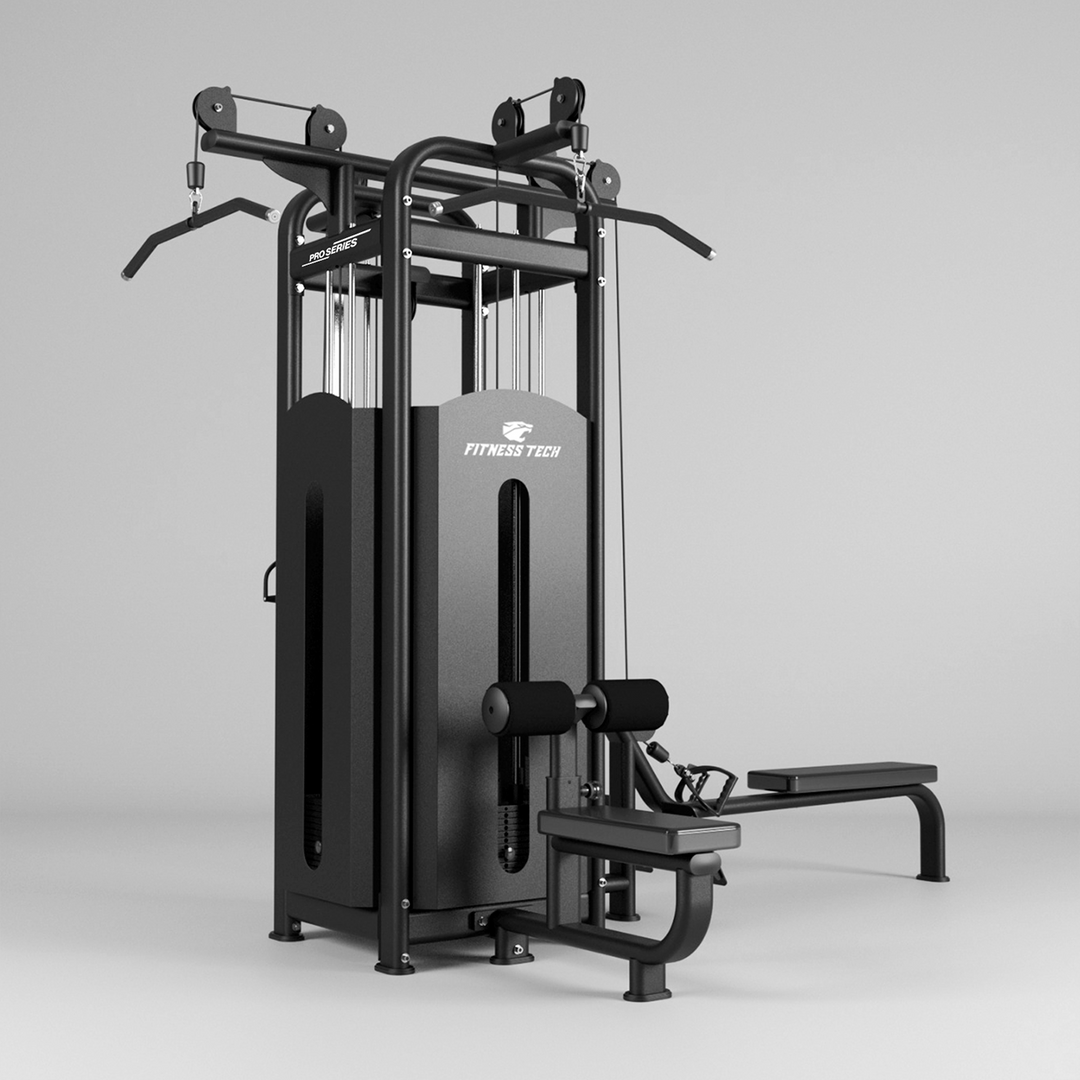
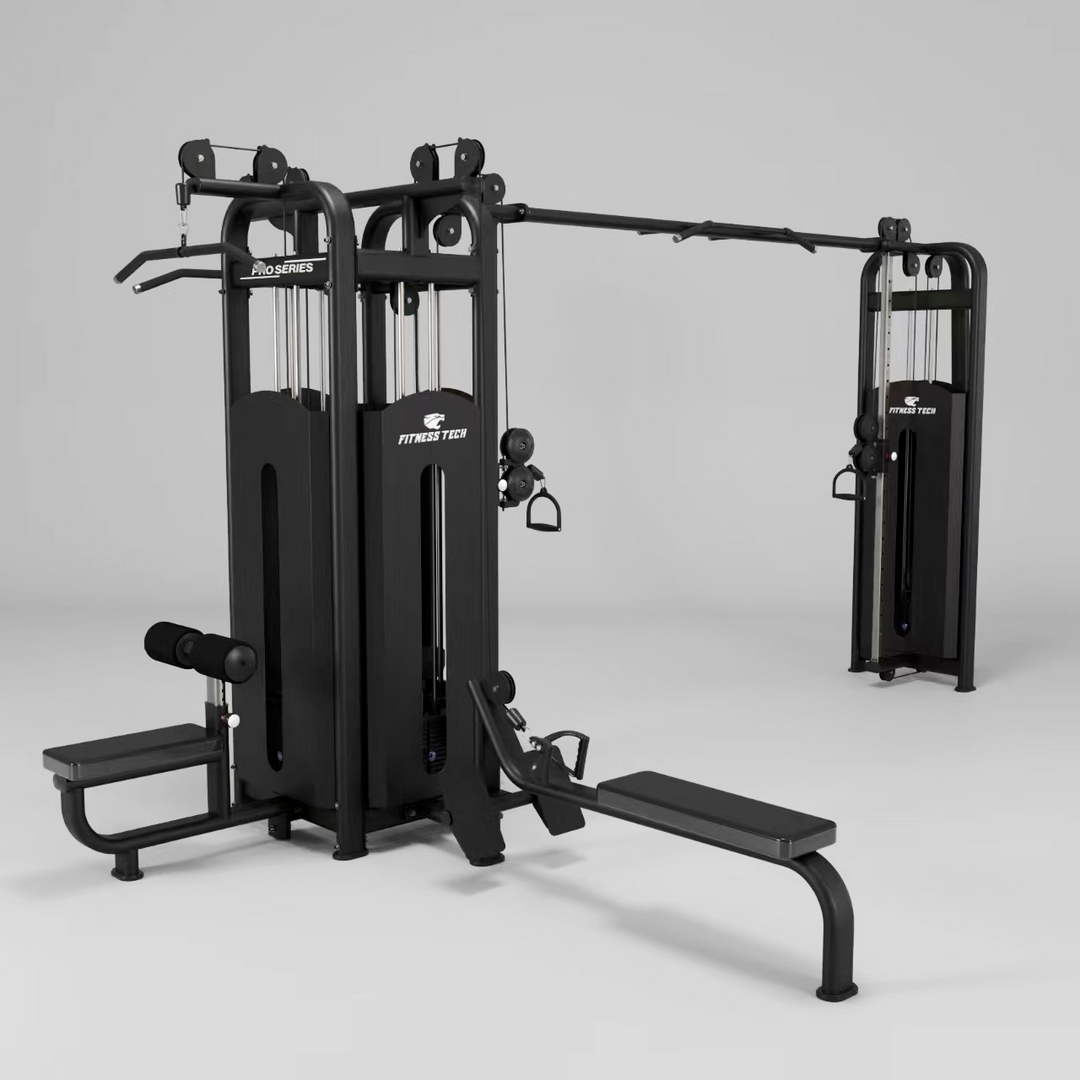


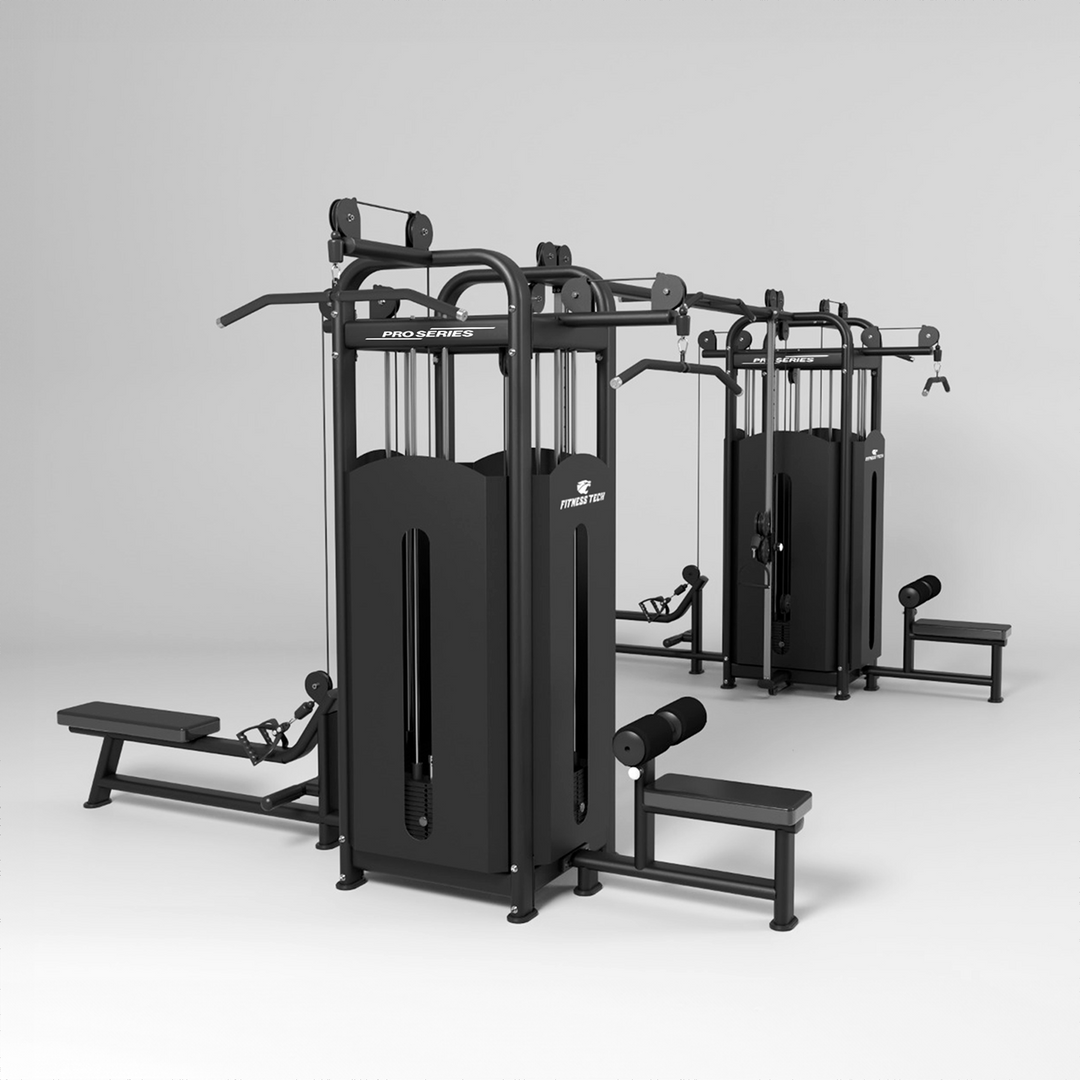


Multi-station bodybuilding machines bring together different training stations in a single structure to work different muscle groups without needing to change machines. Also known as multi-function machines, they allow different strength exercises to be combined using pulley systems, workstations and weight stacks.
At Fitness Tech, you will find 2-, 4-, 5- and 8-station multi-station machines, distributed across the Pro Series and Compact Series ranges. The different configurations allow the equipment to be adapted to the number of users, the available space and the type of installation.
What is a multi-station machine and how does it work?
A multi-station machine integrates different workstations within a single structure. Depending on the model, it may include a high pulley, low row, adjustable pulleys, a pull-up and assisted dip station, among other options.
Fitness Tech machines use weight stacks and pulley systems to provide resistance during exercise. The configuration varies by model and determines both the number of users who can train simultaneously and the exercises available.
Integrated workstations
The workstations depend on the configuration of each multi-station machine. The options available from Fitness Tech include high pulleys, low rows, adjustable pulleys, pull-up stations and assisted dip stations.
The Pro Series 2-Station Multi-Station Machine features two independent columns with 32 adjustment levels and an integrated pull-up bar. The Pro Series 4-Station Multi-Station Machine combines a high pulley, a low row and two adjustable pulleys. The 5-station configuration adds an assisted pull-up and dip station, while the 8-station model includes two high pulleys, two low rows, an assisted pull-up and dip station, and three adjustable pulleys.
Multi-station machine, multipower, rack and functional cage: differences
Although all these structures are part of bodybuilding and strength equipment, their configuration and training methods are different.
- Multi-station machine: integrates different training stations and pulley systems into a single structure.
- Multipower or Smith Machine: uses a guided bar to perform exercises along a controlled path.
- Rack: a structure mainly intended for free-weight training using barbells, plates and different accessories.
- Functional cage: a structure that allows free-weight exercises and functional training to be combined with different accessories and configurations.
The choice between these solutions depends on the type of training you want to perform, the space available and the number of users at the facility.
Selectorized or plate-loaded
A machine with a selectorized weight stack uses weight stacks integrated into the structure itself, so resistance is selected directly on the machine. This allows you to change the load without having to place external plates for each exercise.
The Fitness Tech multi-stations available in this category use independent weight stacks. Depending on the model, each station has its own stack, and the pulley system may use different transmission ratios.
Technical specifications to check before buying
Before choosing a multi-station machine, it is important to review its main technical specifications. The number of stations, available load, dimensions and transmission system determine the usage options for each model and the space required for installation.
Weight stack and cable ratio (1:1 and 2:1)
The weight stack determines the available load at each station, while the cable transmission ratio modifies the resistance received by the user and the pulley travel.
In the Pro Series models, we find ratios 1:1 y 2:1 depending on the station. The 1:1 ratio is used on high pulleys, low rows and, depending on the model, assisted pull-ups. The adjustable pulleys use a 2:1 ratio.
For example, the Pro Series 4-Station Multi-Station includes four 90 kg stacks, with a 1:1 ratio on the high pulley and low row and a 2:1 ratio on the two adjustable pulleys.
Maximum load capacity and maximum user weight
The load capacity is one of the details you should check before choosing a multi-station. In the current Fitness Tech range, the stack load varies depending on the model.
The Pro Series 2-Station Multi-Station includes 2 × 100 kg weight stacks. The 4-Station Pro Series model includes 4 × 90 kg, while the 5- and 8-Station Pro Series models include 5 × 100 kg and 8 × 100 kg, respectively.
The Pro Series models reviewed specify a maximum user weight of 180 kg. For Compact Series models, this figure may vary depending on the reference, so we recommend consulting the specification sheet for the specific model.
Dimensions and required space
The machine dimensions are essential for planning the installation. Before purchasing a multi-gym, you should check the height, width, and depth of the selected model and make sure the space allows proper access to its different stations.
The current configurations present significant differences in size. The 2-Station Pro Series Multi-Gym measures 346 × 102 × 237 cm, while the 8-Station Pro Series Multi-Gym reaches 635 × 386 × 244 cm. In the Compact Series, dimensions vary depending on the configuration and model.
In addition to the external dimensions, you must leave sufficient space around the frame to use the different stations and perform exercises with freedom of movement.
Frame, steel, and upholstery
The construction of the multi-gym is particularly important when the equipment is going to be used continuously. The Pro Series models reviewed use Q235 steel frames, stainless steel guides, and nylon pulleys. The Compact Series models reviewed use Q235 structural steel with 2.5 mm thick tubes and 6 mm cables.
For the 4- and 5-station Pro Series models, the specifications also state high-density padded foam upholstery on the corresponding stations.
Comparison of our multi-gyms
The current Fitness Tech range includes 7 multi-gyms: four Pro Series models and three Compact Series models. The available configurations are 2, 4, 5, and 8 stations.
| Model | Series | Stations | Load | Dimensions |
|---|---|---|---|---|
| 2-Station Multi-Gym | Pro Series | 2 | 2 × 100 kg | 346 × 102 × 237 cm |
| 4-Station Multi-Gym | Compact Series | 4 | 100 kg per station | 346 × 165 × 234 cm |
| 5-Station Multi-Gym | Compact Series | 5 | 100 kg per station | 457 × 332 × 235 cm |
| 4-Station Multi-Gym | Pro Series | 4 | 90 kg per station | 386 × 175 × 244 cm |
| 8-Station Multi-Gym | Compact Series | 8 | 100 kg per station | 538 × 319 × 230 cm |
| 5-Station Multi-Gym | Pro Series | 5 | 100 kg per station | 534 × 386 × 244 cm |
| 8-Station Multi-Gym | Pro Series | 8 | 100 kg per station | 635 × 386 × 244 cm |
Specifications may vary depending on each model’s configuration. Consult the product specification sheet before planning the installation and check the dimensions, column load capacity, and available space in particular.
Pro Series
The Pro Series currently consists of four configurations: 2, 4, 5, and 8 stations. The models are intended for professional facilities and allow different combinations of pulleys and workstations.
The configuration changes according to the number of stations. The 2-station model functions as a cable crossover with two 100 kg columns, 32 adjustment levels, and an integrated pull-up bar. The 4-station model combines a high pulley, low row, and two adjustable pulleys. The 5- and 8-station models also include assisted pull-up and dip stations, along with different configurations for simultaneous training.
Compact Series
The Compact Series currently includes configurations with 4, 5, and 8 stations. These models combine different training stations within a single structure.
Compact models include different pulldown and rowing stations, adjustable pulleys, and configuration-specific training options. The 5- and 8-station models also include cable fly modules.
Exercises you can do on a multi-station machine
The exercise options depend on the stations and accessories included with each model. Cable systems allow you to perform different pulling and pushing movements to work the chest, back, shoulders, arms, and core, while certain configurations include specific stations such as assisted pull-ups and dips.
- Back: lat pulldowns, rows, and other pulling exercises using a pulley.
- Chest: cable flyes on models that include this station.
- Shoulders: raises and other movements using adjustable pulleys.
- Arms: biceps curls and triceps extensions.
- Core: abdominal exercises using a rope and pulley.
- Upper body: assisted pull-ups and dips on models that include this station.
Example full-body routine
A multi-station machine allows you to organize a full-body routine by combining different exercises based on the available stations. A session may include back exercises using pulldowns or rows, chest exercises using cable machines, shoulder and arm movements, and core exercises.
In multi-user models, different users can work simultaneously at independent stations. The 4-Station Multi-Station Pro Series, for example, allows up to 4 users to train simultaneously, while the 5- and 8-station Pro Series versions allow up to 5 and 8 users, respectively.
How to choose your multi-station machine
To choose a multi-station machine, you should primarily consider the available space, the number of users, the stations you need, and the available load at each station.
It is also important to check the model's dimensions and configuration before planning the installation. A multi-station with several stations requires more floor space than a lower-capacity model, but it allows more users to train within the same structure.
For home gyms
For a home gym, the available space is one of the first aspects you should check. The machine's dimensions determine both the floor area required for installation and the space available to use its different stations correctly.
The 2-station Pro Series configuration measures 346 × 102 × 237 cm and combines two independent columns with 32 adjustment levels each. It is a different configuration from the multi-station units with multiple stations intended for facilities with a larger number of users.
For semi-professional facilities and hotels
In semi-professional facilities and hotels, a multi-station brings different workout stations together within a single structure and facilitates simultaneous training. The Compact Series currently offers 4-, 5-, and 8-station configurations.
The number of stations should be chosen based on the number of users who will use the equipment and the space available for its installation.
For commercial gyms
In a commercial gym, the number of stations is especially relevant when simultaneous training needs to be facilitated. The Pro Series currently includes 2-, 4-, 5-, and 8-station configurations, while the Compact Series offers 4-, 5-, and 8-station configurations.
The 4-, 5-, and 8-station Pro Series models allow up to 4, 5, and 8 users, respectively, to train simultaneously. Their different stations combine high pulleys, low rows, adjustable pulleys, and, depending on the model, pull-ups and assisted dips.
Maintenance and assembly of a multi-station
A multi-station integrates different mechanical components that must be kept in good condition to maintain its performance. It is important to regularly inspect the cables, pulleys, fasteners, and moving parts and keep the frame clean.
It is also advisable to check that the cables move correctly and that the different stations operate without any issues. Regular cleaning helps keep the equipment in good working condition.
Due to the dimensions and weight of certain models, especially in multi-station configurations, assembly and access planning must be taken into account before installing the equipment. Product pages provide the dimensions and weight of each model to help plan the installation.